Doctoral Candidates
Our programme will welcome its first cohort of ten exceptional doctoral candidates by the end of 2025. These scholars will contribute to groundbreaking research and advance knowledge in their respective fields.

Our programme will welcome its first cohort of ten exceptional doctoral candidates by the end of 2025. These scholars will contribute to groundbreaking research and advance knowledge in their respective fields.
Project: Discovering the Achilles heels of AMR opportunistic pathogens that find a reservoir in the human gut
Host: European Molecular Biology Laboratory
Originally from Japan, Mari completed a BSc in Biochemistry and an MRes in Molecular Microbiology at Imperial College London, where she developed strong training in bacterial genetics and experimental microbiology. Her research interests centre on antimicrobial resistance and the genetic factors that constrain its emergence and persistence. Her PhD work aims to understand how microbial community context and genomic background influence AMR evolution in clinically relevant bacteria, with the broader goal of identifying strategies to counter-select for resistance in natural settings.

Project: Fitness effect of resistance mutations within microbiomes
Host: Gulbenkian Institute for Molecular Medicine
Xinyue obtained her Bachelor’s degree in Biology and Pharmacy Sciences at Jilin University, China, and completed a joint Master’s programme between the University of Chinese Academy of Sciences and Aarhus University, Denmark. Her Master’s research focused on antibiotic biosynthesis and resistance gene mining, giving her broad training in microbial genetic engineering. Her PhD research investigates how antibiotic resistance affects bacterial fitness in the gut environment, using the mouse gut as an in vivo model and integrating genetic manipulation with competitive fitness assays

Project: Inducible resistance elements in microbiome species as a low fitness cost reservoir of AMR
Host: Umeå University
Annika holds an MSc in Molecular Medicine from the University of Tübingen, Germany, where she developed a strong interest in microbiology. During her Master’s, she worked in Prof. Lisa Maier’s lab on understanding the effects of human-targeted drugs on the gut microbiome. She joined the lab of Prof. André Mateus as a PhD student, where her research focuses on characterising mechanisms of drug resistance in species of the human gut microbiome.
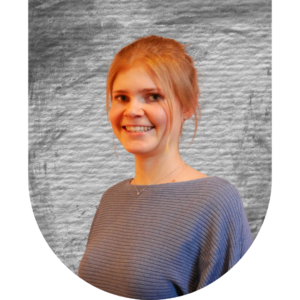
Host: European Molecular Biology Laboratory
Originally from California, Audrey studied Biology at the University of Oxford, UK. She subsequently worked in agricultural and conservation genomics at the San Diego Botanic Garden and the Salk Institute, with projects spanning transcriptomics, population genomics, and soil metagenomics. A unifying theme across her work is translating non-model genomics into applications for human and environmental health, which now motivates her PhD research on the environmental metagenomics of antimicrobial resistance.

Project: Uncovering drivers of conjugation-mediated antibiotic resistance gene spread in Enterobacteriaceae
Host: University of Tübingen
Originally from Canada, Delaney completed a BSc in Microbiology & Immunology at McGill University and an MSc in Medical Science at the University of Calgary. Her Master’s research examined how changes in early-life social contact and hygiene during the COVID-19 pandemic may shape the infant gut microbiome. She brings broad experience in microbiome research, antimicrobial resistance, and global health to her PhD work on the mechanisms driving resistance gene transfer in Enterobacteriaceae.

Project: Mechanisms and diagnostics of heteroresistance
Host: Uppsala University
Marijan is from Zagreb, Croatia. He obtained his Bachelor’s degree in Molecular Biology at the University of Zagreb and completed a Master’s in Evolutionary Biology at Leiden University, the Netherlands. His academic background spans microbiology, evolution, and bioinformatics, with hands-on experience in experimental evolution and various omics methods. His PhD research focuses on the evolutionary dynamics of antibiotic heteroresistance in Gram-negative bacteria.
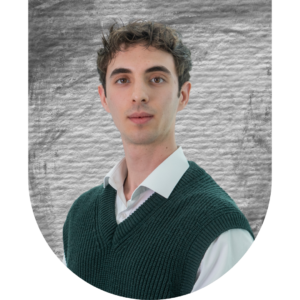
Project: Mechanistic models of response to antibiotics in systems of interacting bacteria
Host: Human Technopole
Originally from Siberia, Russia, Andrei studied at Novosibirsk State University, where he developed a passion for quantitative ecology. He brings extensive experience in metagenomic data analysis, bioinformatics, and flux-based modelling from his work at the Institute of Cytology and Genetics, where he focused on the functional analysis of the human gut microbiome. His PhD research investigates how ecological relationships within microbial communities are influenced by antibiotic interventions and what role they play in the emergence and spread of resistance.
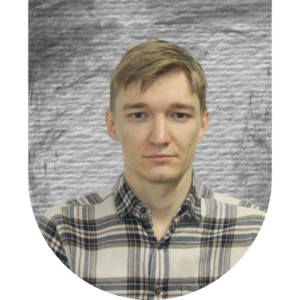
Project: Collateral susceptibility effects of antineoplastic drug exposure on antibiotic resistance
Host: The University of Tromsø – The Arctic University of Norway
Originally from China, Ciyin received her training in molecular life sciences and microbiology at Northwest Agricultural & Forest University, China, and the University of Copenhagen, Denmark. Her scientific background centres on bacterial genetics and antibiotic resistance, with particular interests in plasmids, gene regulation, and microbial adaptation. Her PhD research explores how exposure to antineoplastic drugs can create collateral susceptibility effects on antibiotic resistance, bridging bacterial evolution with public and environmental health.
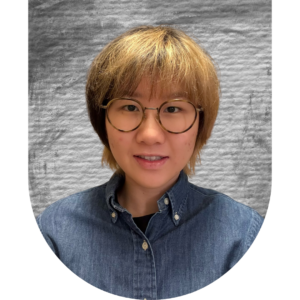
Project: Drug combinations targeting beta-lactamase-resistant pathogens
Host: Biological Research Centre of the Hungarian Academy of Sciences
Kamran holds a BSc in Molecular Biology and Genetics and an MSc in Bioinformatics, both from Middle East Technical University, Turkey. His graduate training focused on statistical modelling, machine learning, and next-generation sequencing analysis, while his undergraduate work provided a solid foundation in molecular biology and laboratory techniques. His PhD research applies these computational and experimental skills to identifying effective drug combinations against beta-lactamase-resistant pathogens.
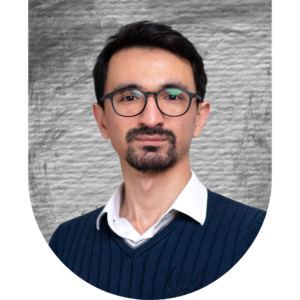
Project: Identifying drug combinations for preventing the evolution of resistance
Host: Hebrew University of Jerusalem
Zohar completed a BSc in Chemistry and Biology at Tel Aviv University, where she gained research experience in biophysics and structural biology. She then pursued an MSc in Physical Chemistry at the Hebrew University of Jerusalem, studying how bacterial physiological states influence responses to antimicrobial peptides using biophysical and chemical methods. Her PhD research builds on this interdisciplinary background to identify drug combinations that can prevent the evolution of antibiotic resistance.